The Heart: Your Body's Incredible Pump
Imagine a delivery system that never sleeps. Your heart is a powerful motor that keeps blood moving, carrying oxygen and nutrients to every single cell in your body. It's not just an organ; it's the engine of life!
.jpg)
The Journey of Breath
Blood flow isn't random—it's a perfectly organized highway system. Everything follows a specific direction to ensure your body gets the oxygen it needs to thrive.

Arteries: The Outward Bound
Think of arteries as high-pressure delivery trucks. They carry oxygen-rich blood away from your heart to every cell in your body. Because the heart pumps so hard, these walls are thick and stretchy!

Veins: The Return Trip
Veins are the return collectors. After your cells use the oxygen, veins carry the blood back to the heart. They have tiny one-way valves that act like gates, stopping blood from flowing backward!

FOUR CHAMBERS
Right Atrium — Receives oxygen-poor blood returning from the body through the superior and inferior vena cava.
Right Ventricle — Pumps oxygen-poor blood to the lungs through the pulmonary artery.
Left Atrium — Receives oxygen-rich blood returning from the lungs through the pulmonary veins.
Left Ventricle — Pumps oxygen-rich blood to the rest of the body through the aorta. It has the thickest muscular wall because it generates the pressure needed for systemic circulation.
HEART VALVES
Valves keep blood moving in one direction and prevent backflow.
-
Tricuspid Valve — Between the right atrium and right ventricle.
-
Pulmonary Valve — Between the right ventricle and pulmonary artery.
-
Mitral (Bicuspid) Valve — Between the left atrium and left ventricle.
-
Aortic Valve — Between the left ventricle and aorta.
-
Aortic Valve — Between the left ventricle and aorta.
Quick Quiz
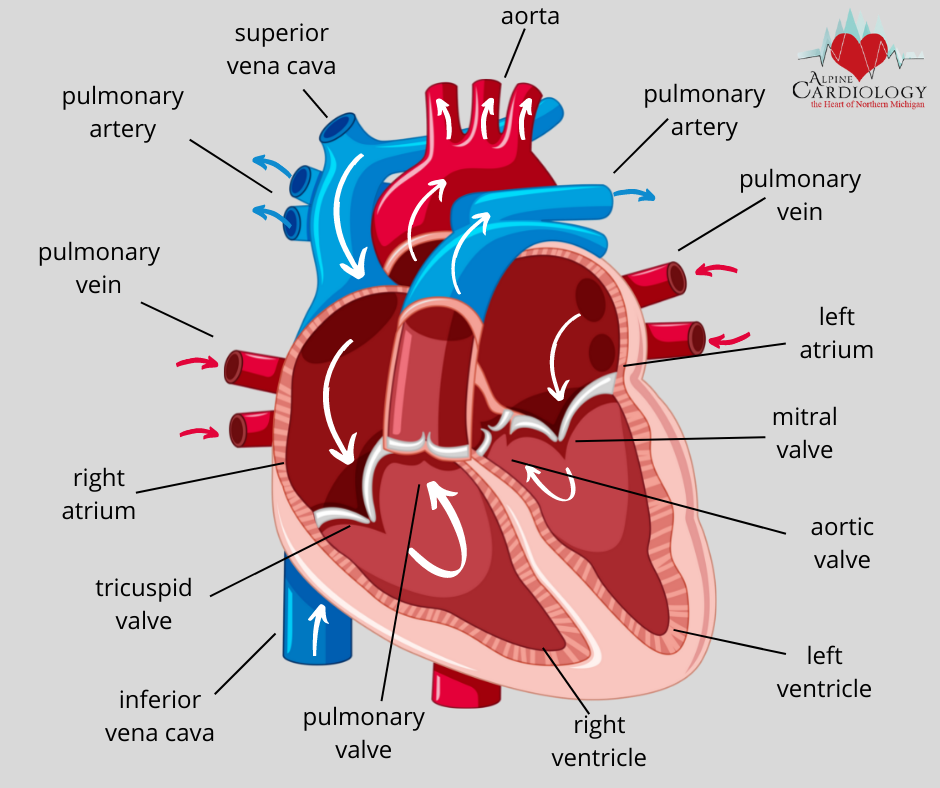
HEART VESSELS AND VALVES
HEART VALVES
Valves keep blood moving in one direction and prevent backflow.
-
Tricuspid Valve — Between the right atrium and right ventricle.
-
Pulmonary Valve — Between the right ventricle and pulmonary artery.
-
Mitral (Bicuspid) Valve — Between the left atrium and left ventricle.
-
Aortic Valve — Between the left ventricle and aorta.
-
Aortic Valve — Between the left ventricle and aorta.
CARDIAC CYCLE
The cardiac cycle describes the sequence of filling and contraction during one heartbeat.
Deep Dive: The Heart
-
Diastole — the heart relaxes and its chambers fill with blood.
-
Systole — the ventricles contract and pump blood out.
Why It Matters
The cardiac cycle ensures that the heart fills with blood and pumps it out in a coordinated sequence. This allows continuous circulation and ensures that oxygen and nutrients reach the body's tissues while carbon dioxide and other wastes are carried away.